September 8, 2026
Which Is Right for Your Roanoke, VA Home?
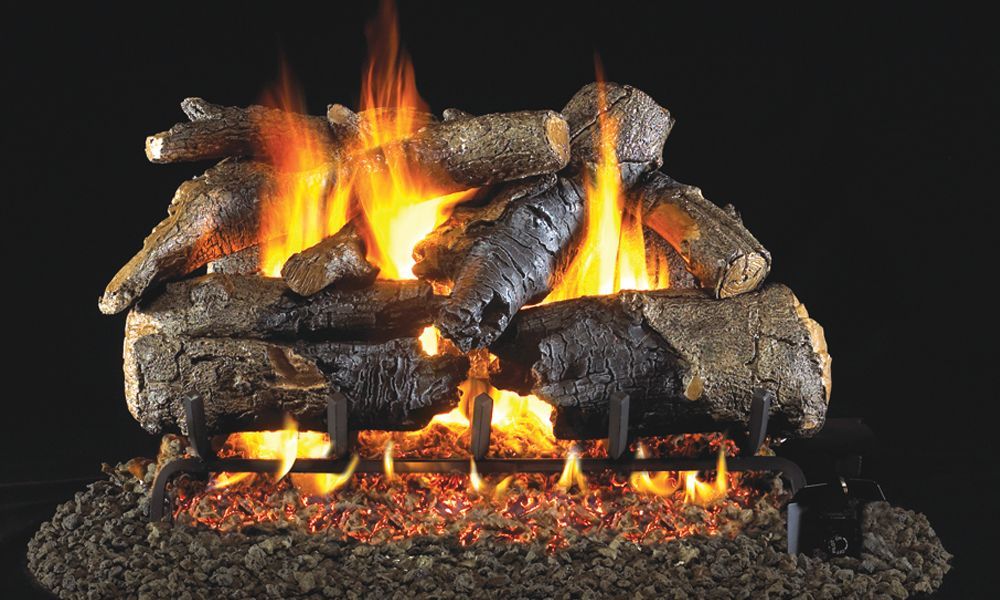
Gas logs.
Gas fireplace insert.
Gas fireplace.
They all burn gas. They all make fire. And somehow the fireplace industry managed to name them just similarly enough that perfectly intelligent homeowners walk into our showroom looking like somebody just handed them the wiring diagram for a nuclear submarine.
We hear some version of this almost every week:
“I have a wood-burning fireplace and want to convert it to gas. What do I need?”
Great question.
The answer might be gas logs.
It might be a gas fireplace insert.
Or it might make more sense to replace the existing fireplace and install an entirely new gas fireplace.
Those are three very different projects.
At Skyline Hearth & Fire, we help homeowners throughout Roanoke, Salem, Bedford, Forest, Lynchburg, Smith Mountain Lake, Moneta, Lexington, Blacksburg, Christiansburg and surrounding areas of Southwest Virginia figure out which option actually makes sense for their house.
So before you start shopping based entirely on whichever fireplace picture made you stop scrolling, let's clear this up.
Gas Logs vs. Gas Insert vs. Gas Fireplace: The Quick Answer
If you only remember three things from this article, remember these:
Gas logs are a burner and decorative log system installed into a suitable existing fireplace or firebox.
A gas fireplace insert is an appliance installed inside a suitable existing fireplace opening.
A gas fireplace is the complete fireplace appliance itself and is typically framed into the home during new construction, replacement or remodeling.
There are exceptions because fireplaces enjoy making simple answers slightly more complicated, but that's the basic framework.
What Are Gas Logs?
Gas logs are probably the simplest option to understand.
Instead of building a wood fire, a gas burner and decorative log set are installed into an appropriate fireplace or firebox.
The existing fireplace remains the fireplace.
You're changing what produces the fire inside it.
That makes gas logs a popular option for homeowners who like their existing masonry fireplace but are thoroughly finished with hauling wood through the living room, cleaning up bark, shoveling ashes and discovering one random insect in the house that apparently traveled inside on a piece of oak like Lewis and Clark.
Modern gas logs can look remarkably realistic.
Skyline works with manufacturers including RH Peterson Real Fyre, Grand Canyon, Monessen and Empire, giving homeowners a wide range of log styles, burners, control systems and flame presentations.
But there is an important distinction.
Vented Gas Logs
Vented gas logs are designed for use in a suitable fireplace with a functioning chimney or flue.
The fireplace vents combustion products outdoors much like it does when burning wood.
The big advantage?
Flame appearance.
Quality vented gas logs can produce tall, natural-looking yellow flames and a traditional open-fire presentation. If someone tells us, “I really just want the fireplace to look like a beautiful wood fire without dealing with wood,” vented gas logs immediately become part of the conversation.
The tradeoff is heating performance.
Because the fireplace must vent properly while the logs operate, a meaningful amount of the heat produced leaves through the chimney.
That's not a malfunction.
That's simply the nature of an open, vented fireplace system.
So if your number-one priority is realistic flame and convenience, vented gas logs can be fantastic.
If your number-one priority is turning the fireplace into a serious supplemental heater, we may need to keep talking.
Vent-Free Gas Logs
Vent-free gas logs operate differently.
Instead of using a conventional chimney to exhaust combustion products, an approved vent-free system is designed to operate without traditional venting.
That allows considerably more of the heat produced by the appliance to remain in the room.
But vent-free does not mean “stick this thing anywhere it'll physically fit.”
The fireplace or firebox must be approved for the particular application, the appliance needs to be properly sized, manufacturer instructions must be followed, and state and local requirements apply.
In other words, Craigslist Steve saying, “I've done a bunch of these” is not a product listing.
If you already have gas logs and need inspection, cleaning or troubleshooting, Skyline provides professional gas log service throughout the Roanoke region and Southwest Virginia.
What Is a Gas Fireplace Insert?
This is the one homeowners confuse with gas logs most often.
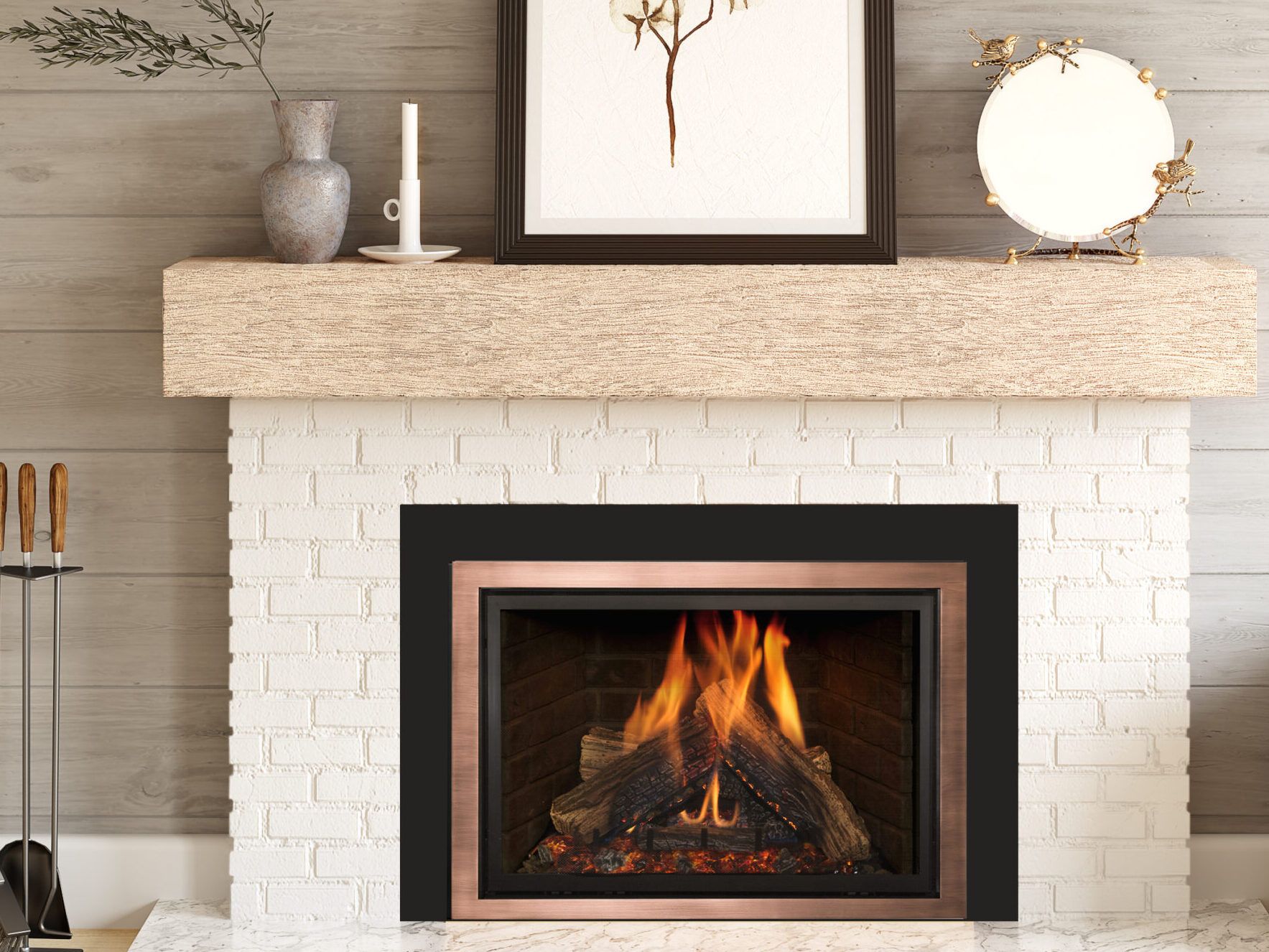
A gas fireplace insert is an actual fireplace appliance installed inside a suitable existing fireplace.
Instead of leaving the original firebox open and installing a burner and logs inside it, an insert places a manufactured appliance into that opening.
The existing fireplace structure remains around it.
The insert becomes the working fireplace.
That is a completely different animal from gas logs.
What Does a Gas Insert Look Like?
Most modern gas inserts have:
- A glass-front viewing area
- Their own burner system
- Decorative logs, glass or other media depending on the model
- Controls or remote operation
- A surround or finishing panel around the appliance
- Blower or convection features on many models
And yes, they can look really good.
Kozy Heat, one of our primary fireplace manufacturers, offers gas inserts including the Chaska and Nordik series specifically for upgrading existing fireplace openings.
A good insert installation can take a fireplace that looks like it came free with three acres of 1978 and make it look completely intentional again.
Are Gas Fireplace Inserts Direct Vent?
Many of the premium gas inserts we install today are direct-vent appliances.
A direct-vent gas insert uses an engineered venting system to bring combustion air to the appliance and exhaust combustion gases outdoors. In a masonry fireplace application, that venting commonly runs through the existing chimney, which essentially becomes a chase for the appliance's venting system.
But here's the part I want homeowners to understand:
“Insert” describes how the appliance is installed. It does not automatically tell you every detail about how that appliance vents.
Vent-free inserts also exist.
The specific fireplace, opening, chimney, appliance listing and manufacturer's requirements determine what can actually be installed.
If you want a deeper explanation of sealed combustion and heat performance, we already covered that in Direct Vent Fireplaces: The Truth About Efficiency & Heat Loss.
Why Choose a Gas Fireplace Insert?
For a homeowner with a suitable existing fireplace, an insert can hit a pretty attractive middle ground.
You preserve the existing fireplace structure but upgrade the part doing the actual work.
Depending on the selected appliance and installation, benefits can include:
- Strong supplemental heat
- Controlled flame output
- Sealed glass-front operation on direct-vent models
- Thermostatic or remote controls
- Blower-assisted heat circulation
- No firewood storage
- No ash cleanup
- Updated appearance
- Multiple fronts, surrounds and interior design options
That makes gas fireplace inserts especially appealing in older masonry fireplaces throughout Roanoke, Salem, Bedford, Lynchburg and Smith Mountain Lake.
A fireplace that has spent the last 20 years serving primarily as a decorative shelf underneath the television can suddenly earn its keep again.
Can a Gas Insert Go Into Any Existing Fireplace?
No.
And this is one of the most important points in this entire article.
Just because an insert physically looks like it will fit does not mean it is approved for that fireplace.
Before recommending an insert, we need to know what you're starting with.
That may include:
- Whether the existing fireplace is masonry or factory-built
- Manufacturer and model information on factory-built fireplaces
- Opening width
- Opening height
- Firebox depth
- Rear firebox dimensions
- Hearth construction
- Chimney condition
- Existing venting
- Gas availability
- Appliance clearances
- Manufacturer installation requirements
This is exactly why we provide professional fireplace installation services rather than playing Fireplace Tetris and hoping the black rectangle goes into the hole.
What Is a New Gas Fireplace?
A built-in gas fireplace is the complete fireplace appliance.
It does not need to be installed inside an existing masonry fireplace.
It can be framed into a wall during:
- New construction
- An addition
- A renovation
- Replacement of an existing factory-built fireplace
- A complete fireplace remodel
- Construction of a new fireplace wall
And that's where the design possibilities get much larger.
Want traditional logs and stone?
Easy.
Want a lower-profile gas fireplace that works beautifully beneath a television?
Absolutely.
Want a giant linear fireplace, floor-to-ceiling stone, built-ins, accent lighting and a fireplace wall that finally looks like somebody designed the room on purpose?
Now we're having fun.
Skyline works with premium gas fireplace manufacturers including Kozy Heat, Archgard, Majestic, Empire, Montigo and others, allowing us to select the fireplace around the house and the design rather than trying to force every project into one manufacturer or one appliance.
If you're also considering electric, our Gas vs. Electric Fireplaces in Roanoke, VA guide breaks down that decision separately.
Gas Logs vs. Gas Insert: Which Produces More Heat?
There isn't one universal answer because vented gas logs and vent-free gas logs behave very differently.
Vented Gas Logs
Vented gas logs are generally selected more for appearance and convenience than maximum heating performance.
You're enjoying a real gas flame in an open fireplace while combustion products vent through the chimney.
Beautiful?
Absolutely.
The most efficient way to turn fuel into room heat?
No.
Vent-Free Gas Logs
Vent-free systems keep substantially more of their heat inside the room because they don't exhaust through a conventional chimney.
That can make them powerful supplemental heaters in approved applications.
Gas Fireplace Inserts
A modern gas fireplace insert—particularly a direct-vent model designed as a heating appliance—can provide excellent supplemental heat while giving homeowners much more control over fireplace operation.
This is one of the main reasons somebody may walk into our showroom planning to buy gas logs and eventually decide an insert better matches what they actually want.
Not because one option is universally “better.”
Because they're trying to accomplish different things.
Which Looks More Realistic: Gas Logs or a Gas Insert?
This one gets interesting.
If your only goal is recreating the appearance of an open wood-burning fire, high-quality vented gas logs are extremely hard to beat.
There is no glass between you and the fire, and premium log systems from manufacturers such as RH Peterson Real Fyre and Grand Canyon can produce exceptional realism.
But modern gas inserts have gotten ridiculously good.
Detailed log sets.
Glowing ember beds.
Improved burner technology.
Better interior panels.
Large viewing areas.
Cleaner surrounds.
If you haven't looked at premium gas inserts in ten or fifteen years, don't assume you know what they look like now.
Fireplace technology has moved on.
Your mental picture may still be wearing pleated khakis and carrying a BlackBerry.
Gas Insert vs. New Gas Fireplace: What's the Difference?
Here's the easiest way to remember it:
An insert goes into an existing fireplace.
A built-in gas fireplace is the fireplace.
That distinction becomes extremely important during a remodel.
If we can use the existing fireplace and a listed insert fits the application, an insert may give you the performance and appearance you want without tearing apart the entire fireplace structure.
But if you're already planning a major transformation, replacing an outdated factory-built fireplace, changing the size or location of the viewing area, or completely redesigning the wall, a new gas fireplace may make much more sense.
Our guide on completely remodeling an old fireplace shows just how far one of these projects can go.
Can You Convert a Wood-Burning Fireplace to Gas?
In many homes, yes.
But the phrase “convert my wood fireplace to gas” can describe several completely different projects.
You may be talking about:
- Installing vented gas logs in a suitable wood-burning fireplace
- Installing a vent-free gas log system where the fireplace and application permit it
- Installing a gas fireplace insert in the existing fireplace
- Removing or replacing the existing fireplace and installing a new gas fireplace
Those aren't different versions of the same product.
They're fundamentally different systems.
That's why the first question shouldn't be:
“How much are gas logs?”
It should be:
“What do I want this fireplace to do?”
Which Option Is Usually Less Expensive?
Generally, the order goes like this:
Lowest Project Complexity: Gas Logs
If the fireplace is suitable, the gas supply is straightforward and no major corrective work is required, gas logs are typically the simplest of the three options.
Middle: Gas Fireplace Insert
An insert requires the appliance, required venting or other installation components, gas connection, finishing surround and proper installation into the existing fireplace.
Highest Potential Investment: New Gas Fireplace or Full Remodel
Once we're removing an existing unit, reframing walls, installing venting, modifying gas and electrical, adding stone, replacing hearths, building mantels or adding cabinetry, we're no longer talking about changing the thing that makes fire.
We're remodeling part of the house.
The actual investment depends heavily on what we're starting with and where we're going.
We've already broken down real local project ranges and cost drivers in our 2026 Fireplace Remodel Cost Guide for Roanoke, VA.
When Does Replacing the Entire Fireplace Make More Sense?
Sometimes homeowners become so focused on preserving the existing fireplace that they accidentally make the project harder.
There are plenty of situations where replacement deserves serious consideration.
For example:
- The existing factory-built fireplace is obsolete
- Replacement components are unavailable
- The existing fireplace is damaged
- The desired insert isn't listed or approved for the existing fireplace
- You want a significantly larger viewing area
- You want a completely different fireplace style
- You're already rebuilding the wall
- The existing venting doesn't work with the desired system
- The old fireplace performs poorly
- You hate the entire thing with the burning intensity of a thousand suns
At some point, “working around it” becomes the expensive option.
That's where Skyline's turnkey approach becomes particularly valuable.
We can handle the fireplace, framing, venting, gas, electrical, hearth, mantel, stone and finish work as one coordinated project.
Far fewer opportunities for six different contractors to stand in your living room pointing at one another like the Spider-Man meme.
Which One Should I Choose?
Here's the short version.
Choose Vented Gas Logs If:
You have a suitable functioning fireplace, love the appearance of an open fire, want the convenience of gas and aren't primarily trying to turn the fireplace into a high-performance heater.
Consider Vent-Free Gas Logs If:
You want substantial supplemental room heat and your fireplace, room, local requirements and selected appliance all support a vent-free application.
Choose a Gas Fireplace Insert If:
You have a suitable existing fireplace and want to upgrade its performance, appearance and convenience without completely replacing the surrounding fireplace structure.
Choose a New Gas Fireplace If:
You're replacing an outdated fireplace, building new, changing the overall design, creating a fireplace where none currently exists or completing a full fireplace transformation.
And sometimes after we look at the house, the right answer changes completely.
That's normal.
The house gets a vote.
Do I Still Need Fireplace Service After Converting to Gas?
Yes.
“Gas” does not mean “maintenance-free.”
Gas fireplaces and gas log systems contain burners, pilots or ignition systems, gas controls, media and—in vented appliances—venting components that need to remain in proper operating condition.
If you already own a gas appliance and are having problems, start with our guide to 8 common reasons a gas fireplace won't turn on.
We also provide direct-vent fireplace service and professional gas log service throughout our service area.
Gas Fireplace Installation in Roanoke, VA and Southwest Virginia
A gas fireplace installation isn't just a decorating project.
We're dealing with a fuel-burning appliance, gas piping, venting, clearances, manufacturer specifications and the construction surrounding the fireplace.
Those details matter.
Skyline Hearth & Fire is locally owned, family owned and veteran owned, with NFI-certified professionals and more than 20 years of fireplace equipment experience.
We provide fireplace sales, installation, service, repair and complete remodeling throughout Roanoke and surrounding Southwest Virginia communities.
Our service area includes:
- Roanoke
- Salem
- Vinton
- Cave Spring
- Botetourt County
- Daleville
- Bedford
- Forest
- Lynchburg
- Smith Mountain Lake
- Moneta
- Lexington
- Blacksburg
- Christiansburg
- Covington
- Clifton Forge
- Bent Mountain
- Surrounding Southwest Virginia communities
Frequently Asked Questions About Gas Logs, Inserts and Gas Fireplaces
Are gas logs the same as a gas fireplace insert?
No.
Gas logs consist of a gas burner and decorative media installed in an approved fireplace or firebox.
A gas fireplace insert is an appliance installed inside a suitable existing fireplace.
Is a gas fireplace insert better than gas logs?
It depends on what you're trying to accomplish.
Homeowners primarily interested in an open-fire appearance may prefer quality vented gas logs.
Homeowners interested in stronger controlled supplemental heat and a finished appliance may prefer a gas insert.
Are vented gas logs good for heating a room?
They produce heat, but a significant portion of that heat leaves through the chimney because the system must vent combustion products outdoors.
Vented logs are generally chosen first for flame appearance and convenience.
Do gas fireplace inserts produce good heat?
Many modern gas inserts are specifically designed to provide supplemental heat.
Actual heat output and efficiency vary by model and installation, so the fireplace needs to be selected for the room and homeowner's goals.
Does a gas insert use the existing chimney?
Many direct-vent gas inserts installed in masonry fireplaces use the existing chimney as a chase for the appliance's dedicated venting system.
The insert doesn't simply exhaust freely into the old chimney.
The exact vent configuration depends on the listed appliance and its installation instructions.
Can I put an insert into a factory-built wood fireplace?
Some gas inserts are listed for installation into certain factory-built wood fireplaces, but not every insert can be installed into every factory-built fireplace.
The existing fireplace and proposed insert both need to be evaluated.
Can I replace old gas logs with a gas fireplace insert?
Potentially, yes.
If the existing fireplace is suitable for the selected insert, the old gas log system can be removed and the fireplace evaluated for an insert installation.
Can Skyline convert my wood-burning fireplace to gas?
Yes. Skyline provides wood-to-gas fireplace conversions and fireplace installation services, including gas logs, inserts and complete fireplace replacement depending on the application.
What if I don't know what type of fireplace I have?
That's extremely common.
Photos, dimensions and manufacturer information can help, but for major fireplace upgrades we can evaluate the existing system and determine which options are actually appropriate.
You don't need to become a fireplace expert before you call the fireplace experts.
Gas Logs, Insert or New Fireplace? Let Skyline Help You Figure It Out
If you've been researching gas fireplaces and somehow ended up with 37 browser tabs open while knowing less than when you started, welcome to the fireplace industry.
We'll simplify it.
Skyline Hearth & Fire can evaluate your existing fireplace, talk through the way you actually want to use it, and help determine whether gas logs, a gas insert, a new fireplace or a complete remodel makes the most sense.
And because we're turnkey, we don't stop at selling the appliance.
We can handle the entire project from the guts behind the wall to the stone you actually see when it's finished.
Schedule a free in-home fireplace design consultation with Skyline Hearth & Fire, visit our Roanoke showroom at 1619 Shenandoah Avenue NW, Roanoke, VA, or call 540-595-9194.
Because the goal isn't to sell you the most expensive fireplace.............
The goal is to put the right fireplace in the right house and do it right the first time.