October 20, 2026
What’s underneath your pavers matters a whole lot more than what they look like on top.

Most homeowners shopping for a new paver patio spend their time looking at colors, patterns, borders, textures, and whether something called “Coastal Buff” actually looks coastal or just beige.
Fair enough.
That’s the fun part.
But the part that determines whether your patio still looks good years from now is buried underneath it where nobody will ever see it:
The base.
And when it comes to building paver patios in Virginia, two systems tend to come up over and over:
Dense-graded aggregate, often called crusher run or crush-and-run.
And...
Open-graded aggregate, commonly built with clean angular stone such as ASTM #57 stone and a smaller clean-stone bedding layer above it.
Both can work.
Both have advantages.
And despite what the internet would have you believe, choosing between them isn’t as simple as declaring one the undisputed heavyweight champion of gravel.
At Skyline Hardscapes & Premier Outdoor Living, we design and build paver patios and complete outdoor living spaces throughout Roanoke, Salem, Bedford, Smith Mountain Lake, and surrounding Southwest Virginia communities.
And around here, we have one thing that makes base preparation especially important:
Virginia dirt.
More specifically...
Clay.
Lots and lots of clay.
So let’s talk about what actually goes underneath a paver patio, how these two base systems are different, and why the correct answer depends on the property.
First: Why Does the Paver Base Matter So Much?
Think about your paver patio like a house.
Nobody walks into a beautiful home and says:
“Man, look at that foundation.”
Unless they’re a structural engineer, in which case they’re probably not much fun at parties anyway.
But without a good foundation, everything sitting on top of it eventually suffers.
Pavers work the same way.
The base underneath them helps:
- Distribute loads
- Support the pavers
- Control settlement
- Manage moisture
- Resist movement
- Maintain proper drainage
- Keep the finished surface flat and stable
You can buy some of the best pavers in the world.
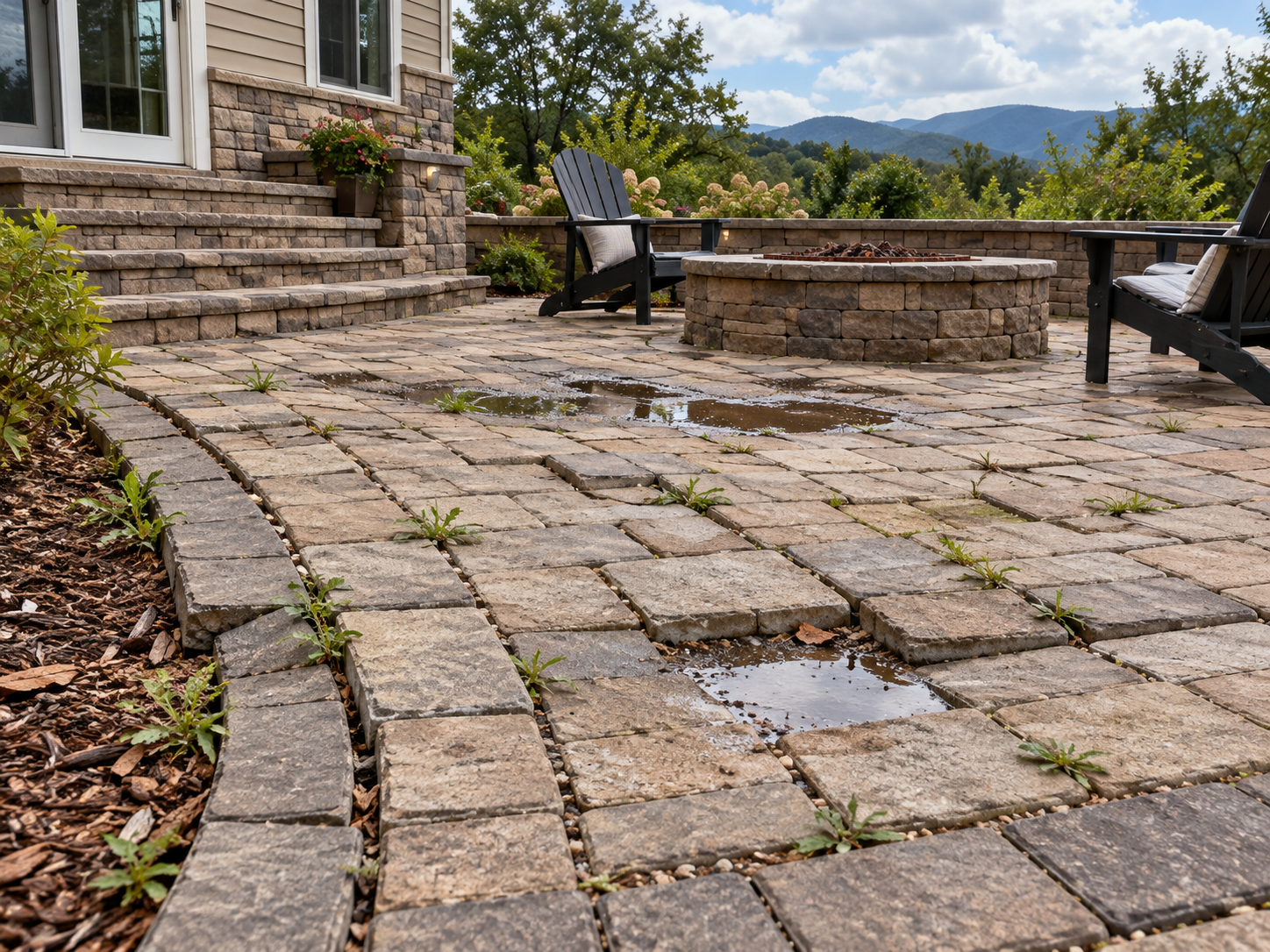
If they’re installed over poorly prepared soil and an inadequate base, those expensive pavers can eventually settle, rock, separate, or develop low spots.
The pretty stuff is only as good as what’s underneath it.
If you haven’t read our guide on why paver patios fail in Virginia, that’s a good companion article to this one because improper excavation, drainage, compaction, and base preparation are some of the biggest reasons patio installations develop problems.
What Is Crusher Run?
Crusher run — sometimes called crush-and-run, road base, dense-graded aggregate, or DGA depending on the supplier — contains different sizes of crushed aggregate along with smaller particles and fines.
Those different particle sizes are important.
When crusher run is installed at the proper moisture content and compacted correctly, the material packs tightly together.
The larger aggregate provides structure.
The smaller material fills the voids.
The result is a dense, stable base capable of supporting an interlocking concrete paver system.
For decades, this has been one of the standard methods used beneath pavers.
And no...
Old doesn’t automatically mean outdated.
Gravity has been around for a while too, and we’re still pretty committed to that.
According to the Concrete Masonry & Hardscapes Association’s current technical guidance, standard sand-set interlocking concrete pavers installed over a dense-graded aggregate base with concrete-sand bedding remain the recommended assembly for most standard interlocking concrete paver applications.
How a Dense-Graded Paver Base Works
A typical residential paver patio using a traditional dense-graded system may include several layers.
Compacted Native Subgrade
The existing soil is excavated to the proper depth and evaluated before aggregate is installed.
Soft areas, organic material, loose soil, or unstable material shouldn’t simply be buried and forgotten about.
Because the patio won’t forget.
Geotextile When Appropriate
Depending on the soil conditions and pavement design, a geotextile separation fabric may be installed between the native soil and aggregate base.
Its purpose is generally to keep fine subgrade soils from migrating into the aggregate system.
Compacted Dense-Graded Aggregate
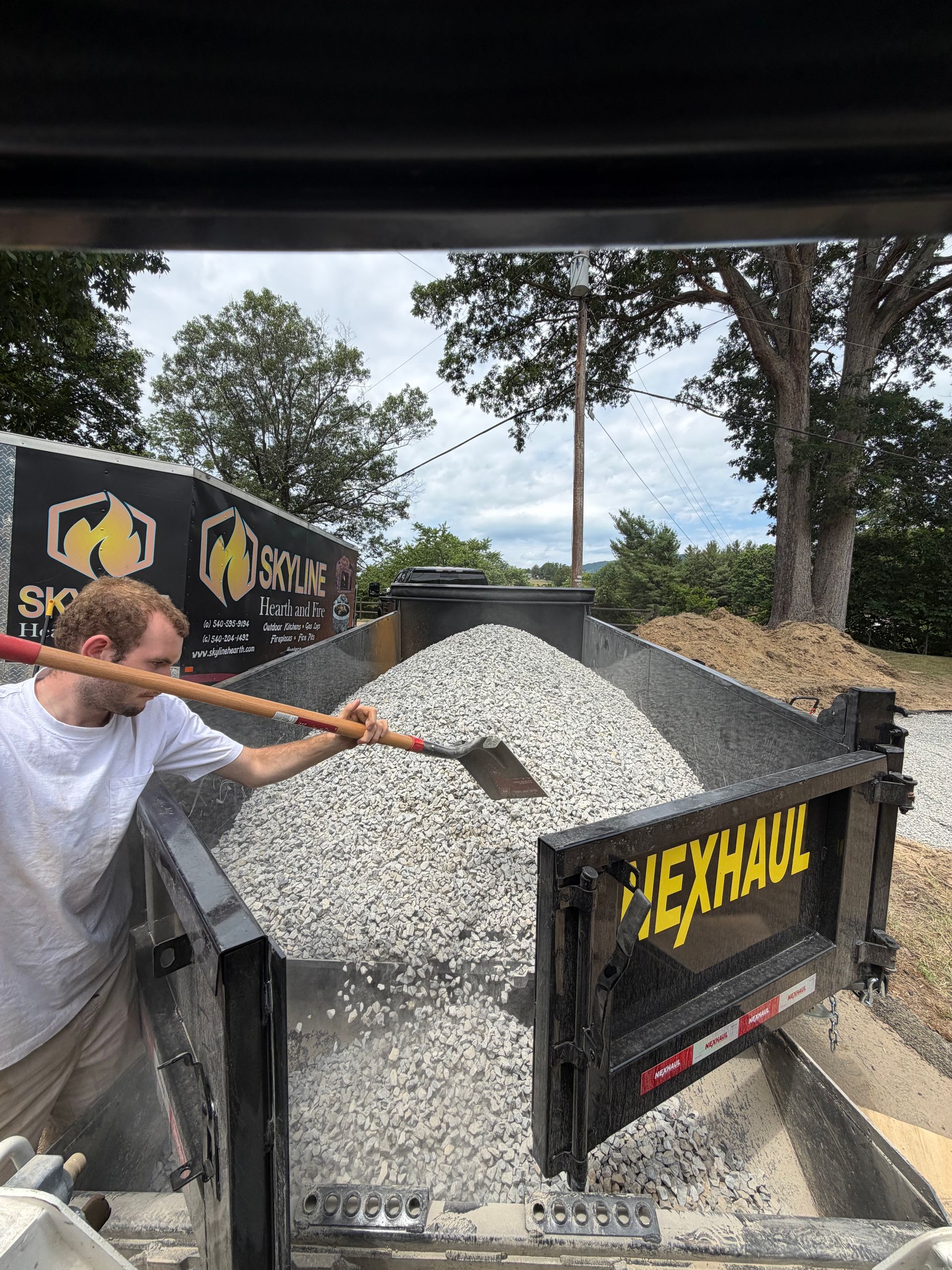
Crusher run is installed and compacted in appropriate lifts rather than dumping one giant mountain of rock into the hole and hoping the plate compactor has superpowers.
Proper compaction is critical.
Bedding Layer
A properly graded bedding material is installed above the compacted aggregate.
For traditional sand-set interlocking concrete pavers, ASTM C33 concrete sand is commonly used as the bedding layer.
Pavers
Finally.
The part everyone actually sees.
Advantages of Crusher Run Under Pavers
There are several reasons dense-graded aggregate remains widely used.
1. It Creates a Very Stable Base
When properly installed and compacted, crusher run creates a dense structural layer beneath the patio.
That makes it a proven choice for many standard interlocking concrete paver installations.
2. Material Is Usually Readily Available
One thing contractors learn pretty quickly is that drawings don’t install patios.
Materials do.
Dense-graded road-base material is commonly available from aggregate suppliers throughout Virginia.
Having consistent access to the correct material matters.
3. The System Has Been Proven for Decades
Dense-graded aggregate isn’t some experimental system somebody invented last Thursday on TikTok.
It has a long history in pavement construction.
CMHA continues to identify dense-graded aggregate with sand bedding as the recommended assembly for most standard interlocking concrete paver applications. You can read CMHA’s guidance here.
4. It Works With Traditional Sand-Set Paver Construction
For standard residential patios using conventional interlocking concrete pavers and sand-filled joints, dense-graded aggregate provides a familiar and well-established installation system.
So What’s the Downside?
Water.
Dense-graded aggregate contains fines.
That’s part of what allows it to compact so tightly.
But it also means water does not travel through the material nearly as freely as it does through an open-graded stone base.
If drainage hasn’t been considered properly, moisture can become a problem.
And in Virginia, we get:
Rain.
Cold.
Warm.
Cold again.
Rain again.
Seventy degrees in February for absolutely no reason.
Then freezing temperatures three days later because Virginia apparently chooses weather using a roulette wheel.
Water beneath pavement needs somewhere to go.
What Is an Open-Graded Paver Base?
An open-graded base takes a different approach.
Instead of aggregate containing a significant amount of fines, the system uses clean, angular crushed stone with open void spaces between the individual stones.
A common residential open-graded system may use:
ASTM #57 Stone for the Base
ASTM #57 is a clean angular aggregate commonly centered around the 3/4-inch range.
Unlike crusher run, it contains very little fine material.
ASTM #8 or #9 Stone for Bedding
A smaller clean angular stone can then be installed above the #57 base to create the bedding course for the pavers.
Unilock describes an open-graded system using approximately 3/4-inch angular ASTM #57 stone for the base and ASTM #8 or #9 stone for the bedding layer. Their open-graded base installation guide is available here.
Because these materials contain very few fines, water can move through the base much more freely.
Think of the difference this way:
Pour water into a bucket filled with sand and fine material.
Now pour water into a bucket full of clean gravel.
One drains a whole lot faster.
That’s the basic idea.
Advantages of an Open-Graded Paver Base
1. Excellent Drainage Through the Base
This is the obvious one.
Open spaces between the aggregate allow water to travel through the pavement base significantly more freely than it can through a dense-graded base.
That can be useful in applications where controlling moisture within the pavement system is especially important.
2. Less Sensitivity to Wet Construction Conditions
Dense-graded aggregate relies partly on having appropriate moisture conditions to achieve proper compaction.
Open-graded stone does not react to water in the same way because it contains very few fines.
That can reduce weather-related installation delays.
CMHA notes that open-graded systems beneath standard pavers can offer benefits related to frost-heave resistance and construction during wet or cold conditions when properly designed and installed.
3. Potential Freeze-Thaw Benefits
Water trapped within a pavement system becomes especially important when temperatures drop below freezing.
The void spaces within an open-graded aggregate system can provide room for water movement and help reduce certain freeze-thaw concerns when the system is properly designed.
4. Installation Can Be Efficient
Open-graded aggregate can often be installed differently from traditional dense-grade material because it doesn’t depend on progressively filling voids with fines.
But don’t confuse “efficient” with:
Throw rock in hole.
The subgrade still needs to be prepared.
The stone still needs to be compacted.
Elevations still need to be correct.
Drainage still needs to be designed.
There is unfortunately still no gravel that eliminates the need to know what you’re doing.
Then Why Doesn’t Everybody Use Open-Graded Base?
Because no single base system is perfect for every application.
This is where internet arguments usually go sideways.
Somebody learns one installation system and suddenly everything else is wrong.
That’s not how good hardscape construction works.
In fact, CMHA’s current guidance says standard pavers over open-graded aggregate may be appropriate under specific limitations, primarily for residential pedestrian applications such as patios, pool decks, sidewalks, and walkways. CMHA does not currently recommend that hybrid system for commercial or vehicular applications. Read the full technical bulletin here.
Virginia Clay Changes the Conversation
Around Roanoke and much of Southwest Virginia, clay-heavy soils are extremely common.
Clay generally does not allow water to move through it very quickly.
So imagine installing an extremely free-draining stone base inside an excavation surrounded by soil that doesn’t drain well.
Congratulations.
You may have just constructed a really expensive underground bathtub.
The water can move beautifully through the gravel.
But then what?
That’s the question that matters.
If the underlying soil is not highly permeable, CMHA recommends including underdrains to prevent water from collecting inside the open-graded base and saturating the subgrade.
That doesn’t mean an open-graded base is bad on clay.
It means:
Drainage has to be designed.
Water needs somewhere to go.
That might involve:
- Proper surface slope
- Drainage stone
- Geotextile separation
- Perforated drain pipe
- Daylighting the drainage system
- Connection to an appropriate drainage outlet
- Managing nearby downspouts
- Redirecting roof runoff
- Evaluating surrounding grades
The exact solution depends on the property.
What About Geotextile Fabric?
Another sentence capable of starting a 300-comment contractor argument online.
Geotextile isn’t simply something you throw underneath every patio because somebody sold you a roll of fabric.
It has specific purposes.
One major purpose is separation.
For an open-graded system installed over fine-grained soil, CMHA recommends geotextile along the bottom and sides of the excavation to help prevent surrounding soil from migrating into the clean aggregate.
That’s especially important because filling the voids in open-graded stone with clay defeats the entire reason the base is open graded in the first place.
Again:
The system has to work together.
The stone.
The soil.
The fabric.
The drainage.
The bedding.
The edge restraint.
The pavers.
They’re all part of one pavement system.
Crusher Run vs. #57 Stone: Which One Do We Prefer?
Here’s the answer homeowners usually don’t expect:
Whichever system makes the most sense for the project.
There.
Shortest blog we’ve ever written.
Unfortunately Google probably isn’t going to rank that, so let’s continue.
For many traditional residential interlocking paver installations, a properly constructed dense-graded aggregate base remains an excellent option.
For certain residential pedestrian projects, open-graded construction can provide meaningful drainage and installation advantages.
The decision can depend on:
- Existing soil conditions
- Drainage
- Patio elevation
- Slope
- Nearby structures
- Water runoff
- Downspouts
- Groundwater
- Intended use
- Paver type
- Manufacturer requirements
- Excavation depth
- Expected loading
- Availability of proper aggregate
And sometimes the answer isn’t completely obvious until excavation begins.
Because dirt is kind of rude like that.
What Matters More Than the Base Material?
Homeowners sometimes get hung up on asking:
“Do you use crusher run or #57?”
That’s a good question.
But there are several questions that matter just as much.
Was the Organic Soil Removed?
Topsoil isn’t a structural base.
Neither is mulch.
Neither is that suspicious black dirt somebody found three inches down.
Was the Subgrade Compacted?
Building the best aggregate base in the world over loose or unstable soil isn’t exactly a winning strategy.
Was the Base Installed Deep Enough?
Base depth depends on the application, soil, loading, drainage, and site conditions.
The answer shouldn’t simply be:
“We always use four inches.”
Always?
On every property?
Every soil?
Every application?
That’s not confidence.
That’s a recipe.
Was It Compacted Correctly?
Dense-graded aggregate requires proper compaction.
Open-graded aggregate also requires compaction and consolidation.
CMHA specifically notes that open-graded aggregates must still be compacted to reduce future settlement and distribute loads properly.
Neither system should simply be dumped into the excavation and declared structurally enlightened.
Does the Patio Have Proper Slope?
Your patio should direct surface water away from structures and toward an appropriate drainage location.
Water should not be encouraged to visit your foundation.
Your foundation did not invite it over.
Are the Edges Properly Restrained?
Interlocking pavers rely on lateral restraint around their perimeter.
Without proper edge restraint, pavers can spread and joints can open.
For open-graded systems, manufacturers may recommend different edge-restraint methods than those used over traditional dense-grade bases. Unilock, for example, recommends a modified concrete edge restraint for its open-graded installation method. See Unilock’s installation guidance here.
Is Water Being Managed Around the Patio?
Downspouts.
Roof runoff.
Nearby slopes.
Retaining walls.
Landscape beds.
Swimming pools.
Existing concrete.
All of those things can influence how water behaves around a patio.
And water has an irritating habit of eventually finding every mistake.
What Base Should Be Used for a Paver Driveway?
Different conversation.
Vehicle loading changes the design requirements significantly.
A backyard patio holding four Adirondack chairs and Uncle Jerry after Thanksgiving dinner is one thing.
A 7,000-pound truck is another.
Driveways require additional consideration for:
- Base thickness
- Subgrade strength
- Traffic loading
- Edge restraint
- Paver thickness
- Drainage
- Aggregate specification
CMHA’s current guidance regarding standard sand-set pavers over an open-graded aggregate base specifically limits that system to residential pedestrian applications and excludes vehicular applications.
The base design for a driveway should not automatically be copied from a residential patio.
Same product category.
Very different job.
What About Stone Dust or Limestone Screenings?
This is another area where local practices vary considerably.
But homeowners should understand that stone dust and screenings are not automatically interchangeable with properly specified bedding or base materials.
Aggregate gradation matters.
Particle shape matters.
Drainage matters.
Manufacturer specifications matter.
This is why:
“We’ve always done it that way.”
...shouldn’t be the entire engineering department.
Materials underneath a paver system should be selected intentionally.
How Deep Should the Base Be Under a Paver Patio?
There isn’t one universal number.
The required depth depends on:
- Soil conditions
- Climate
- Expected loading
- Drainage conditions
- Paver system
- Manufacturer specifications
- Site design
Weak or disturbed soil may require deeper excavation and additional aggregate.
Stable subgrade may allow a different design.
The important part is that the installer actually evaluates the site rather than treating every backyard in Virginia like it came out of the same mold.
Because they definitely didn’t.
The Best Paver Patio Starts Before the First Paver Is Installed
This is probably the biggest takeaway.
A professionally installed patio isn’t just:
Dig hole.
Dump gravel.
Add pretty blocks.
Collect check.
At least it shouldn’t be.
The long-term performance of a paver patio is determined largely by the parts homeowners never see once construction is finished:
- Excavation
- Subgrade preparation
- Drainage
- Aggregate selection
- Compaction
- Bedding
- Slope
- Edge restraint
Those aren’t the glamorous parts of hardscaping.
Nobody has ever walked into our showroom and said:
“Scott, show me your sexiest compacted aggregate.”
But those details are what separate a patio that merely looks good on installation day from one designed to keep performing.
More Than Just Paver Patios
A well-designed outdoor space often includes more than a patio.
Skyline Hardscapes & Premier Outdoor Living can incorporate:
- Paver patios
- Walkways
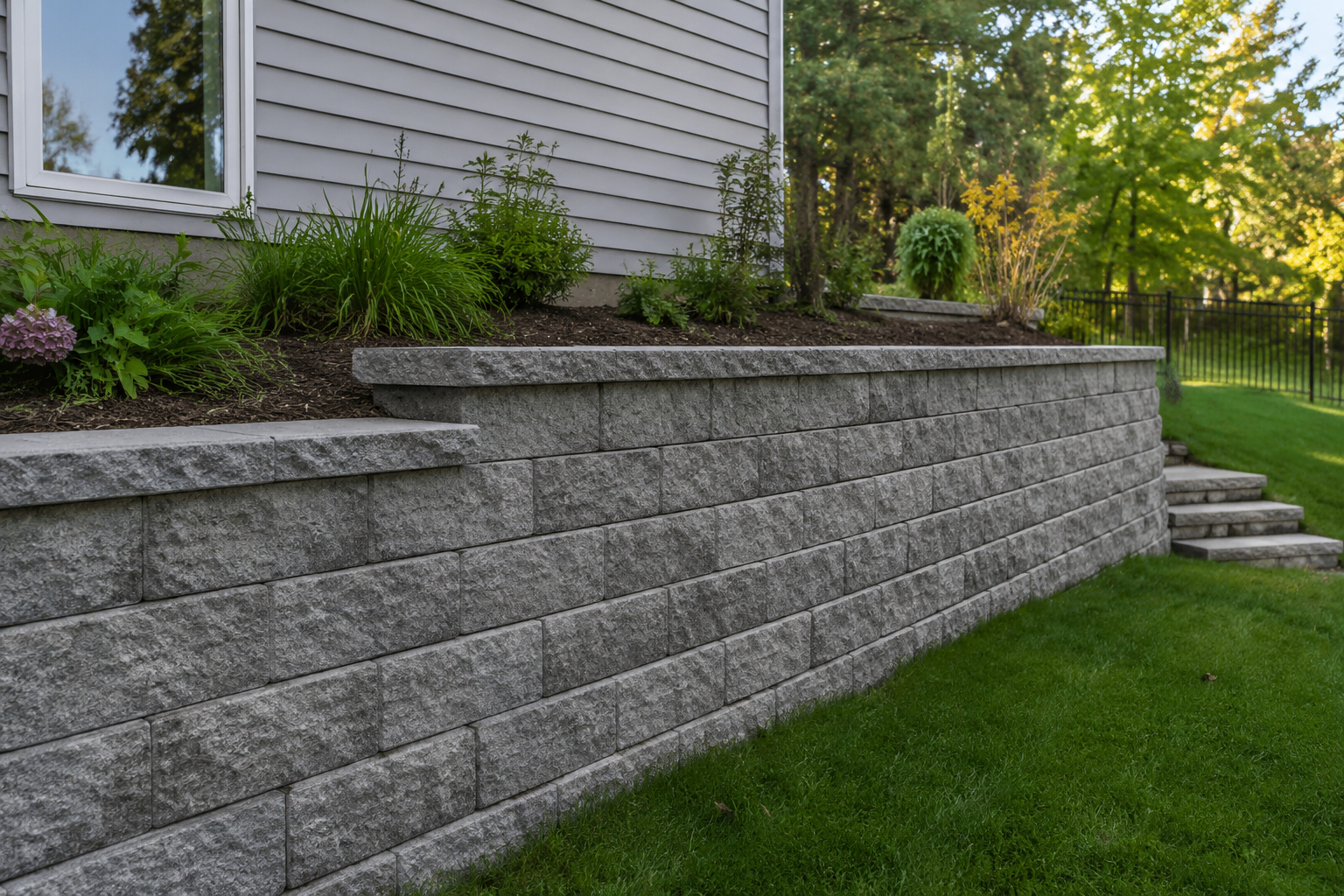
- Retaining walls
- Seating walls
- Fire pits
- Outdoor fireplaces
- Landscape lighting
- Pergolas and outdoor structures
- Custom outdoor kitchens
Instead of treating each feature like a separate project, we can design the entire space around how you actually want to use your backyard.
Paver Patio Installation in Roanoke, Virginia
Skyline Hardscapes & Premier Outdoor Living designs and builds paver patios and complete outdoor living spaces throughout the Roanoke region and surrounding Southwest Virginia communities.
Our service area includes communities such as:
- Roanoke
- Salem
- Vinton
- Bedford
- Smith Mountain Lake
- Moneta
- Daleville
- Botetourt County
- Blacksburg
- Christiansburg
- Lexington
- Lynchburg
- Forest
- And surrounding areas
Every property is different.
So rather than deciding exactly how we’re going to build your patio before we’ve even looked at your yard, we evaluate:
- Existing elevations
- Drainage
- Access
- Soil conditions
- Existing structures
- Desired layout
- How you actually plan to use the space
Then we design the project around the property.
Novel concept, we know.
Ready to Build a Paver Patio That Looks Good Above Ground AND Below It?
Anybody can show you a picture of pretty pavers.
We’re a little more interested in what’s underneath them too.
If you’re considering a new paver patio or complete outdoor living project in Roanoke or Southwest Virginia, contact Skyline Hardscapes & Premier Outdoor Living to schedule a free in-home design consultation.
We’ll look at the property.
We’ll talk about how you want to use the space.
We’ll evaluate drainage and elevations.
And we’ll design the patio from the ground up.
Literally.
Skyline Hardscapes & Premier Outdoor Living
A division of Skyline Hearth & Fire
Done Right.