August 17, 2026
You’ve Been Lied to About Direct Vent Fireplaces: Here’s the Truth
If you’ve been shopping for a gas fireplace, there’s a good chance somebody has told you some version of this:
“Direct vent fireplaces send all your heat outside.”
It sounds logical.
There’s a vent going through the wall or roof. Hot exhaust goes through that vent. So you must be throwing all that expensive heat outdoors, right?
Wrong.
And this misconception has caused homeowners to overlook one of the best combinations of heat, comfort, convenience, and fireplace appearance available today.
At Skyline Hearth & Fire, we work with homeowners throughout Lynchburg, Forest, Bedford, Roanoke, Smith Mountain Lake, Moneta, and surrounding areas of Virginia, and this is a misconception we want to clear up.
So let’s set the record straight.
What Is a Direct Vent Fireplace?
A direct vent gas fireplace is a sealed combustion system.
That phrase—sealed combustion—is the key to understanding how the system works.
The fire is located behind a sealed glass front. Instead of relying on air from inside your home for combustion, a direct vent fireplace brings combustion air in from outdoors.
At the same time, combustion exhaust is vented safely back outside.
Many systems accomplish this through a specialized venting system with separate pathways: one brings outside air to the fireplace while the other carries combustion exhaust away.
In simple terms:
Combustion air: Outside → Fireplace → Outside
Your living space: Room air → Heated by the fireplace → Back into the room
Those are two separate processes.
And that distinction changes the entire conversation about efficiency.
“But If Hot Air Goes Out the Vent, Isn’t That Wasted Heat?”
Yes, some heat leaves through the exhaust.
It has to. That’s part of safely exhausting the products of combustion.
But saying that makes a direct vent fireplace a “heat waster” misses the bigger picture.
Think about your furnace. It has an exhaust system too. The fact that some heat exists in the exhaust doesn’t mean your furnace isn’t heating your house.
The real question is:
How effectively does the appliance turn the energy from its fuel into usable heat inside your home?
And that answer varies from fireplace to fireplace.
Different direct vent fireplaces have different efficiency ratings, BTU outputs, burner systems, heat exchangers, blowers, controls, and heat-management systems.
That’s why you should compare the actual fireplace you’re considering, rather than assuming every direct vent fireplace performs the same way.
One Big Advantage: Your Fireplace Isn’t Using the Air You Already Paid to Heat for Combustion
This is one of the biggest things people miss when talking about direct vent fireplaces.
During a cold Virginia winter, you’ve already paid to heat the air inside your home.
A direct vent fireplace gets the air needed for combustion from outside rather than relying on your conditioned indoor air to feed the fire.
The sealed combustion chamber also keeps the combustion process separated from your living space.
That’s a fundamentally different system from a traditional open fireplace.
Direct Vent Fireplaces Can Produce Serious Heat
Here’s another myth we hear:
“Gas fireplaces are really just for looks.”
Some fireplaces are primarily decorative.
Others can produce a significant amount of usable heat.
Depending on the model you choose, a modern direct vent gas fireplace may offer features such as:
- Adjustable flame height
- Variable heat output
- Thermostatic control
- Remote operation
- Blowers
- Radiant and convective heat
- Electronic ignition
- Multiple heat-management options
- High-efficiency designs
That means your fireplace can be much more than something pretty to look at.
It can become part of how you actually make your home comfortable.
Zone Heating: Put the Heat Where You Actually Live
Think about a typical winter evening in Roanoke, Lynchburg, Bedford, or around Smith Mountain Lake.
You’re spending most of your evening in the family room.
Do you necessarily need to turn up the central heating system and add more heat to every bedroom, hallway, bathroom, and unused room in the house?
Not always.
A properly sized gas fireplace can provide additional heat directly to the living area you’re actually using. That’s the basic idea behind zone heating.
Rather than thinking only about heating every square foot of the house equally, you’re putting comfortable heat where people are spending their time.
For many homeowners, that’s one of the most practical benefits of a quality gas fireplace.
Direct Vent vs. Ventless Fireplaces
This is where the conversation gets interesting.
People sometimes hear that a ventless gas fireplace is “more efficient” because it doesn’t have a vent carrying combustion exhaust outdoors.
If you’re looking strictly at how much of the generated heat stays inside the room, you can understand where that argument comes from.
But efficiency isn’t the only consideration when choosing a fireplace.
A ventless appliance uses indoor air for combustion and releases the products of combustion back into the living space.
A direct vent fireplace operates differently.
It brings combustion air from outdoors and sends combustion exhaust outdoors while keeping the combustion process separated from the living space behind sealed glass.
So instead of simply asking:
“Which one keeps the most heat inside?”
We think the better question is:
“Which fireplace gives me the right combination of heat, comfort, appearance, indoor-air considerations, installation flexibility, and performance for my home?”
That leads to a much better decision.
Direct Vent Gas vs. a Traditional Wood-Burning Fireplace
We love wood-burning fireplaces. There is nothing quite like a real wood fire.
But a traditional open masonry fireplace and a modern direct vent gas fireplace work very differently.
An open wood-burning fireplace can use a substantial amount of room air to support combustion, with that air ultimately moving up the chimney along with the exhaust.
Older fireplace and chimney systems can also be a source of drafts and heat loss when they aren’t being used. That doesn’t make wood bad. It simply means homeowners shouldn’t automatically assume that a traditional masonry fireplace is the more efficient heating option just because the heat from the fire feels intense when they’re standing in front of it.
If your priorities are convenience, controllability, consistent heat, and easy operation, a modern direct vent gas fireplace or gas insert can offer a completely different experience.
Can You Convert an Old Wood-Burning Fireplace to Direct Vent Gas?
In many homes, yes.
And these are some of our favorite fireplace transformations at Skyline Hearth & Fire.
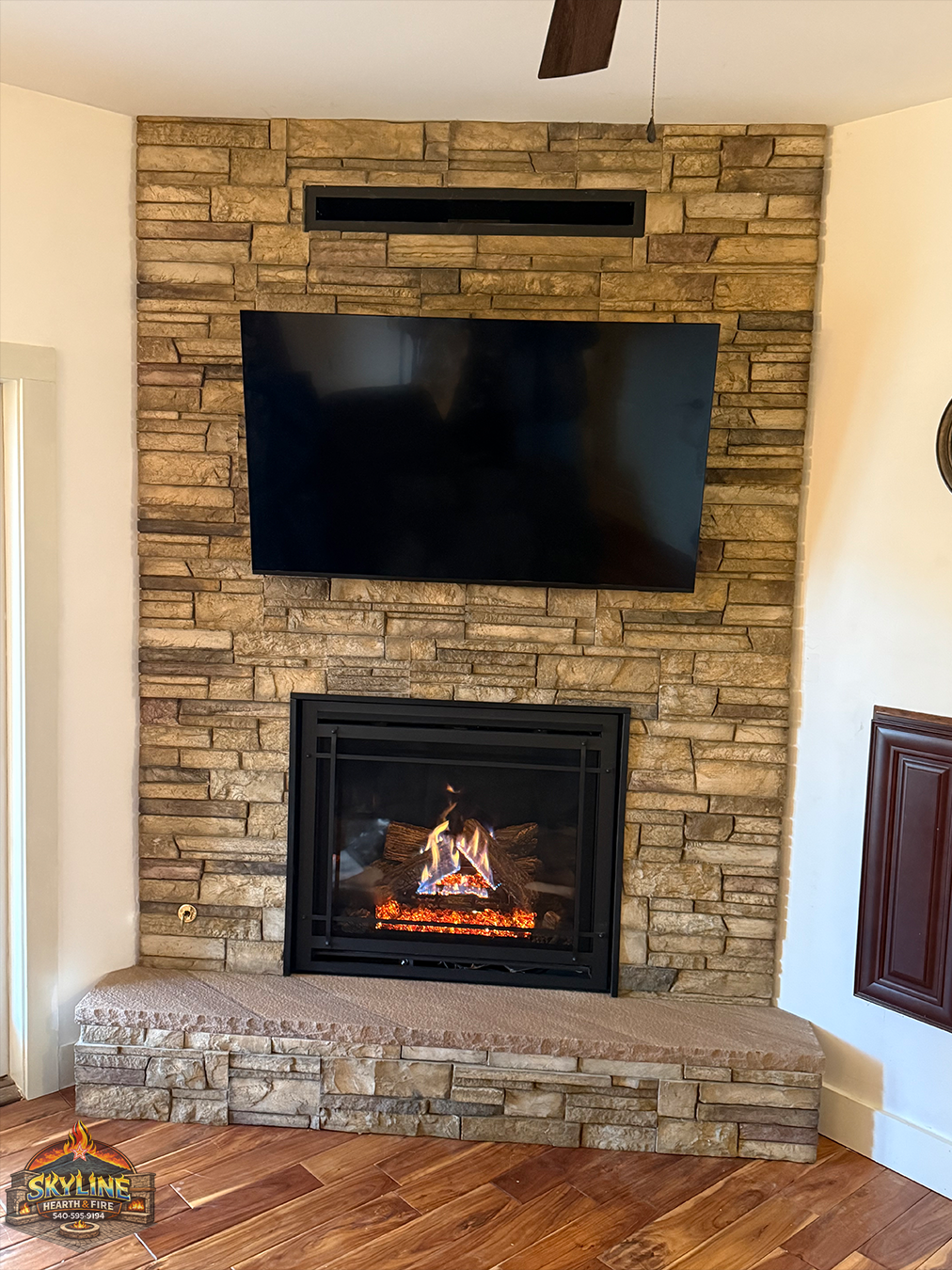
If you have an old masonry fireplace that rarely gets used, a direct vent gas insert may allow you to transform that existing fireplace into a convenient source of heat and ambiance.
A properly selected gas insert is installed into the existing fireplace opening, with an appropriate venting system installed through the existing chimney.
Suddenly, that fireplace can go from:
“We hardly ever use it.”
to:
“We use this thing every night.”
For homeowners who love the location and character of their existing fireplace but are tired of hauling wood, building fires, cleaning ashes, and dealing with an old drafty fireplace, a gas insert can be a game changer.
What If My House Doesn’t Have a Chimney?
This is another major advantage of direct vent technology.
You don’t necessarily need a traditional masonry chimney.
Depending on the fireplace, your home, and the manufacturer’s venting requirements, a direct vent fireplace may be able to vent horizontally through an exterior wall or vertically through the roof.
That opens up a lot of possibilities.
Maybe you’ve always wanted a fireplace in a family room that never had one.
Maybe you’re finishing a basement.
Maybe you’re building an addition.
Maybe you’re remodeling an older home in Lynchburg, Forest, Bedford, Roanoke, or around Smith Mountain Lake and want to completely rethink the fireplace wall.
There may be options you haven’t considered.
The exact possibilities depend on the home, fireplace model, clearances, framing, vent configuration, and installation requirements.
That’s also why we strongly believe the fireplace and the installation should be planned together.
Don’t fall in love with a fireplace online, order it, and then try to figure out how to make it work in your house afterward.
Not All Direct Vent Fireplaces Are Created Equal
This may be the most important point in this entire article.
“Direct vent” describes how the fireplace handles combustion air and exhaust. It does not tell you everything about the quality or performance of the fireplace.
Two direct vent fireplaces can perform very differently.
They can differ in:
- BTU input
- Heat output
- Efficiency
- Flame appearance
- Turn-down range
- Glass size
- Burner design
- Blower performance
- Heat distribution
- Controls
- Venting requirements
- Framing requirements
- Heat-management options
- Overall construction and quality
So when somebody says:
“Direct vent fireplaces are inefficient.”
That statement is far too broad.
But we’d say the same thing about somebody claiming:
“Every direct vent fireplace is extremely efficient.”
That’s too broad too.
Look at the actual appliance.
Look at the specifications.
Look at the room.
Look at what you want the fireplace to accomplish.
Then choose the right fireplace for the job.
How Do You Choose the Right Direct Vent Fireplace?
At Skyline Hearth & Fire, we like to start with the home and work backward.
Before choosing a fireplace, there are several questions worth answering.
How large is the room?
How open is the floor plan?
Are you primarily interested in heat, appearance, or both?
Do you have natural gas available?
Will you be using propane?
Do you already have a fireplace?
Are you remodeling the existing fireplace wall?
Where can the new fireplace be vented?
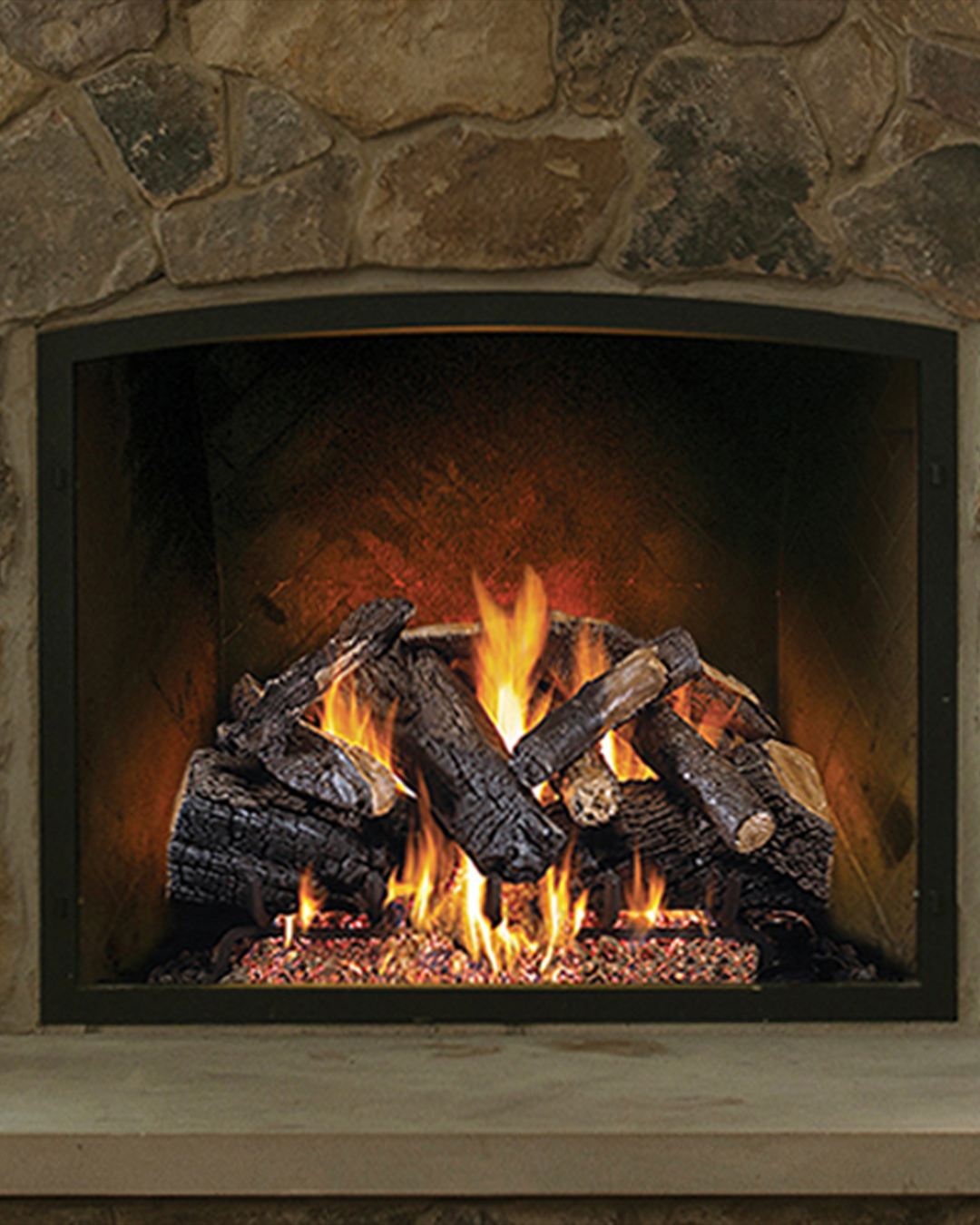
Do you prefer a traditional fireplace with logs?
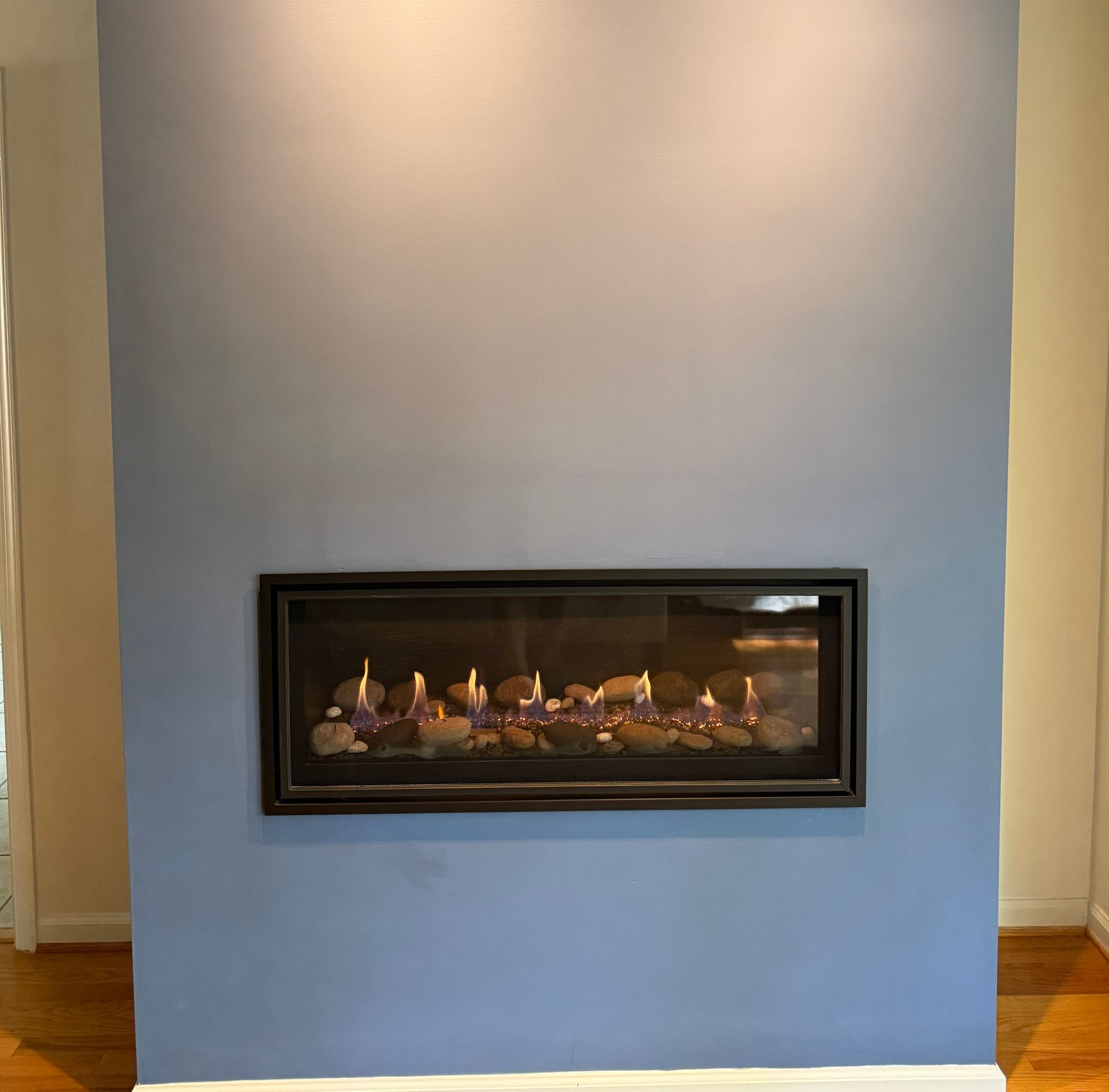
Do you want a contemporary linear fireplace?
How important is flame appearance?
How much control do you want over the heat?
Those questions matter. Because the goal isn’t simply to sell you the biggest fireplace that fits.
The goal is to match the fireplace to the home and to the way you actually want to use it.
So, Are Direct Vent Fireplaces Heat Wasters?
No.
That’s the myth we wanted to put to bed.
A direct vent fireplace is designed to safely exhaust combustion gases outdoors while delivering usable heat into your home.
It draws the air needed for combustion from outdoors rather than relying on conditioned indoor air to feed the fire.
And depending on the model you choose, a modern direct vent fireplace can provide substantial heat along with beautiful flames, easy operation, and flexible installation possibilities.
Is a direct vent fireplace the perfect answer for every single home?
Of course not.
There isn’t one fireplace that’s right for everybody.
But dismissing direct vent fireplaces because someone told you “all the heat just goes outside” could cause you to overlook a fireplace that might be an excellent fit for your home.
Frequently Asked Questions About Direct Vent Fireplaces
Are direct vent fireplaces efficient?
They can be very efficient heating appliances, but efficiency varies by manufacturer and model. Compare the actual efficiency and performance specifications of the fireplaces you’re considering instead of assuming all direct vent fireplaces perform the same way.
Does a direct vent fireplace pull air from inside my house?
The combustion system is designed to bring in outside air for combustion. Room air can still be circulated around the fireplace and heated, but that air remains separate from the sealed combustion process.
Does a direct vent fireplace need a chimney?
Not necessarily. Many direct vent fireplaces can terminate horizontally through an exterior wall or vertically through the roof, depending on the fireplace and the manufacturer’s venting requirements.
Can I put a direct vent gas insert into my existing wood-burning fireplace?
Many existing masonry fireplaces can be converted using a properly sized direct vent gas insert. The fireplace opening, chimney, fuel availability, and installation conditions need to be evaluated before selecting an insert.
Can direct vent fireplaces use propane?
Many direct vent fireplaces are available for either natural gas or propane. Fuel options vary by model.
Will a direct vent fireplace heat my whole house?
That depends on the fireplace and the house, but whole-house heating generally isn’t the best way to evaluate a fireplace. Many gas fireplaces are excellent supplemental or zone-heating appliances. Heating performance depends on factors such as the fireplace model, floor plan, insulation, ceiling height, outdoor temperature, and location of the fireplace.
Is direct vent better than ventless?
There isn’t one answer for every homeowner. The two systems handle combustion very differently. Heat output, indoor-air considerations, installation requirements, appearance, local requirements, and the homeowner’s priorities should all be considered.
Looking for a Direct Vent Fireplace in Roanoke, Lynchburg, Bedford, Forest, or Smith Mountain Lake?
If you’re considering a new gas fireplace, replacing an outdated fireplace, converting an old wood-burning fireplace, or completely remodeling your fireplace wall, don’t start by picking the prettiest fireplace picture you can find online.
Start by figuring out what will actually work in your home.
Skyline Hearth & Fire helps homeowners explore fireplace options throughout Lynchburg, Forest, Bedford, Roanoke, Smith Mountain Lake, Moneta, and surrounding communities in Central and Southwest Virginia.
Whether you’re considering a new direct vent gas fireplace, converting an existing wood-burning fireplace with a gas insert, or planning a complete fireplace remodel, our team can help you understand your options and select a system that makes sense for your home.
Contact Skyline Hearth & Fire to start planning your fireplace project.
And the next time somebody tells you a direct vent fireplace “throws all your heat outside,” you’ll know there’s a whole lot more to the story.