October 18, 2026
The pavers usually aren’t the problem. What’s underneath them is.
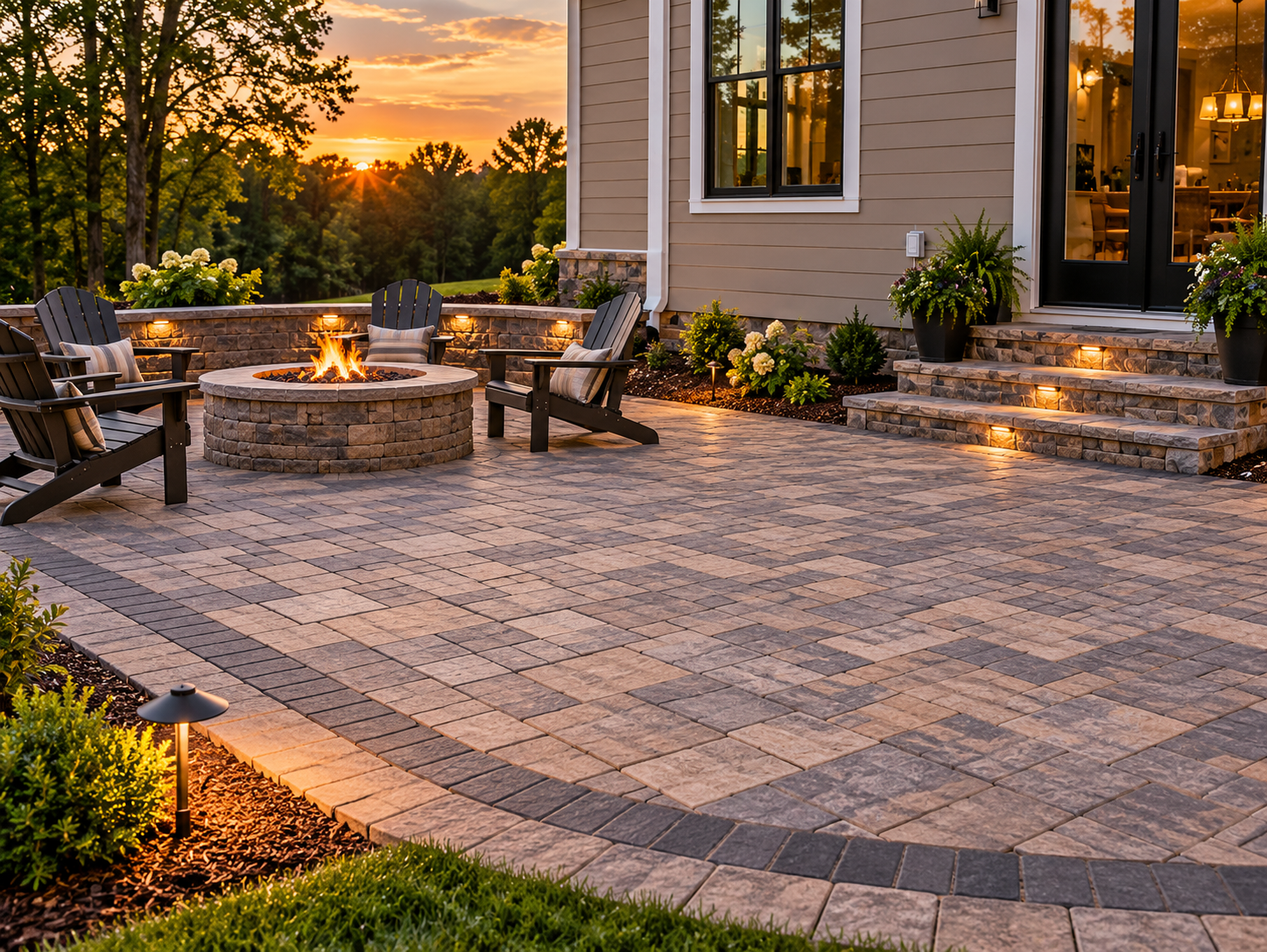
A professionally installed paver patio should last for decades.
So why do some patios start sinking, separating, rocking, holding water, growing weeds, or looking like a miniature motocross track after only a few years?
Usually, the pavers aren't the problem.
The problem is underneath them.
That beautiful Techo-Bloc, Nicolock, Belgard, Unilock, clay brick, or natural stone surface is only the final few inches of an entire pavement system.
And here's the frustrating part:
Once a patio is finished, almost everything that determines whether it lasts is buried where you'll never see it again.
At Skyline Hardscapes & Premier Outdoor Living, we design and build custom paver patios and complete outdoor living spaces throughout Roanoke, Salem, Bedford, Smith Mountain Lake, Botetourt, Lexington, Lynchburg, Blacksburg, Christiansburg, Forest, and surrounding Southwest Virginia communities.
And if there's one thing homeowners should understand about hardscaping, it's this:
The prettiest paver in the world can't save a poorly built foundation.
Here are seven of the biggest installation mistakes that can cause paver patios to fail.
1. Installing Pavers Over Poorly Prepared Soil
Before anybody starts arguing about paver colors, borders, patterns or whether the patio needs a fire pit, there's something much less exciting that needs attention:
Dirt.
Specifically, what's underneath the patio.
The existing soil is called the subgrade, and its condition matters tremendously.
A patio built over soft, disturbed, saturated or poorly compacted soil can eventually experience:
- Settlement
- Low spots
- Rocking pavers
- Uneven surfaces
- Joint separation
- Drainage problems
Simply dumping stone over questionable soil doesn't magically make the problem disappear.
Proper Excavation Matters
A quality patio installation begins by excavating to the depth required for the complete pavement system.
That includes room for:
- The compacted base
- Bedding material
- The paver itself
- Proper finished elevation
- Drainage and pitch
Soft or unsuitable areas may need additional excavation or stabilization before the base is installed.
Because once several tons of stone and pavers are sitting on top of it, discovering a bad spot in the subgrade becomes considerably less convenient.
If you're still in the planning stages, our article on the 7 biggest mistakes people make when building a patio covers the design and planning mistakes that happen before construction even starts.
2. Building an Inadequate Paver Base
If the subgrade is the foundation of the project, the aggregate base is the foundation of the actual patio.
And this is where installation methods can vary.
Dense-Graded vs. Open-Graded Paver Bases
You may hear contractors talk about several different base systems.
Traditional installations often use dense-graded aggregate, commonly referred to locally by names such as crusher run or road base.
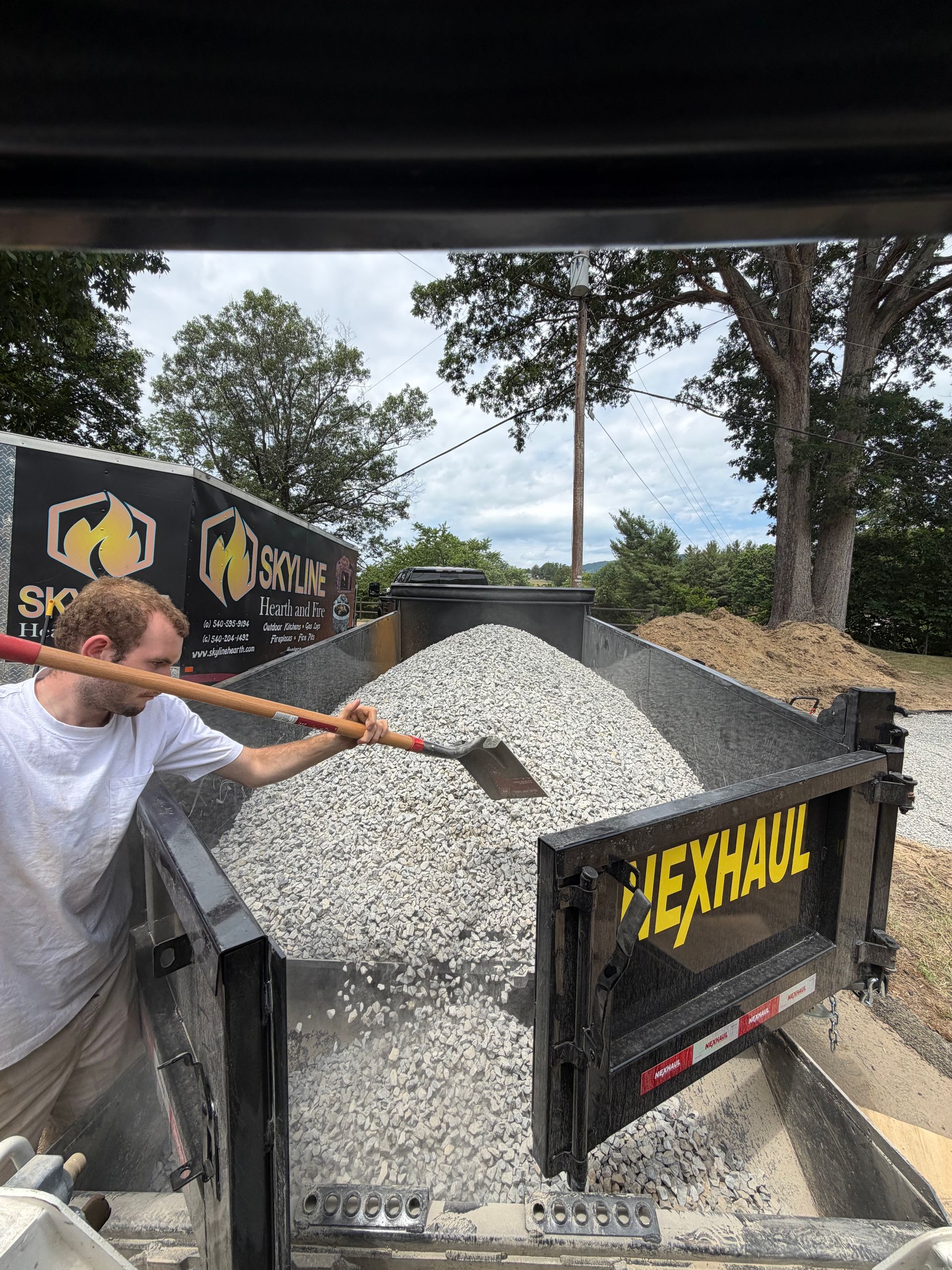
Other installations use an open-graded aggregate system, which may include clean angular stone such as ASTM #57 stone combined with a smaller open-graded bedding aggregate.
Both systems can be appropriate when designed and installed correctly.
The important thing isn't winning an internet argument about which rock is superior.
The important questions are:
- What type of soil is underneath the project?
- How will water move through or around the pavement?
- What does the paver manufacturer recommend?
- What loads will the patio support?
- What bedding system is being used?
- How is the perimeter being restrained?
- Is drainage needed beneath the base?
Different sites can require different solutions.
That's why we don't believe every patio in Virginia should automatically be built exactly the same way.
Base Depth Matters Too
Putting down a couple inches of stone, running a plate compactor across it and calling it a base isn't the same thing as properly building one.
Required depth depends on soil conditions, application and the pavement system being installed.
The base must provide enough structural support to distribute loads while remaining stable through changing weather and moisture conditions.
And yes, that base preparation is one of the reasons quality patios cost what they do. If you're comparing quotes, take a look at our 2026 guide to paver patio costs in Roanoke, VA.
3. Poor Compaction — The Mistake That Comes Back Later
You can use excellent materials and still build a terrible patio if they aren't compacted correctly.
This is one of the biggest differences between simply putting stone in a hole and actually constructing a pavement system.
Why Compaction Matters
Loose aggregate contains voids.
Under weight, weather and use, those materials can continue consolidating.
If that settlement happens after the patio is finished, what's sitting on top of it settles too.
Hello, low spot.
Proper installation generally involves compacting base material as it's installed rather than dumping the entire base depth at once and hoping the compactor somehow handles everything.
More Compaction Isn't Automatically Better
There's another side to this.
Different materials require different compaction techniques and equipment.
A dense-graded aggregate doesn't behave exactly like clean open-graded stone.
So the goal isn't:
Beat the hell out of everything with the biggest machine you can rent.
The goal is proper consolidation of the specific material being installed.
Good hardscaping isn't just muscle.
There's quite a bit of engineering hiding underneath those pretty rectangles.
4. Ignoring Drainage and Finished Elevations
Water is basically the uninvited project manager of every hardscape job.
You can ignore it during construction.
It will still show up later and explain everything you did wrong.
A Patio Has to Send Water Somewhere
The finished surface normally needs positive drainage that directs water away from structures and toward an appropriate discharge area.
Poor grading can cause:
- Standing water
- Water against the foundation
- Erosion
- Saturated base material
- Joint sand loss
- Freeze-thaw movement
- Settlement around edges
Drainage becomes even more important when you're tying a new patio into existing conditions such as:
- Concrete slabs
- Driveways
- Asphalt
- Walkways
- Steps
- Doors
- Retaining walls
Those existing elevations don't move just because the patio would be easier to build if they did.
Sometimes Surface Pitch Isn't Enough
Depending on the soil, base system and surrounding conditions, subsurface drainage may also be necessary.
That doesn't mean every patio needs a drain pipe buried underneath it.
It means drainage should be designed, not discovered after the first thunderstorm.
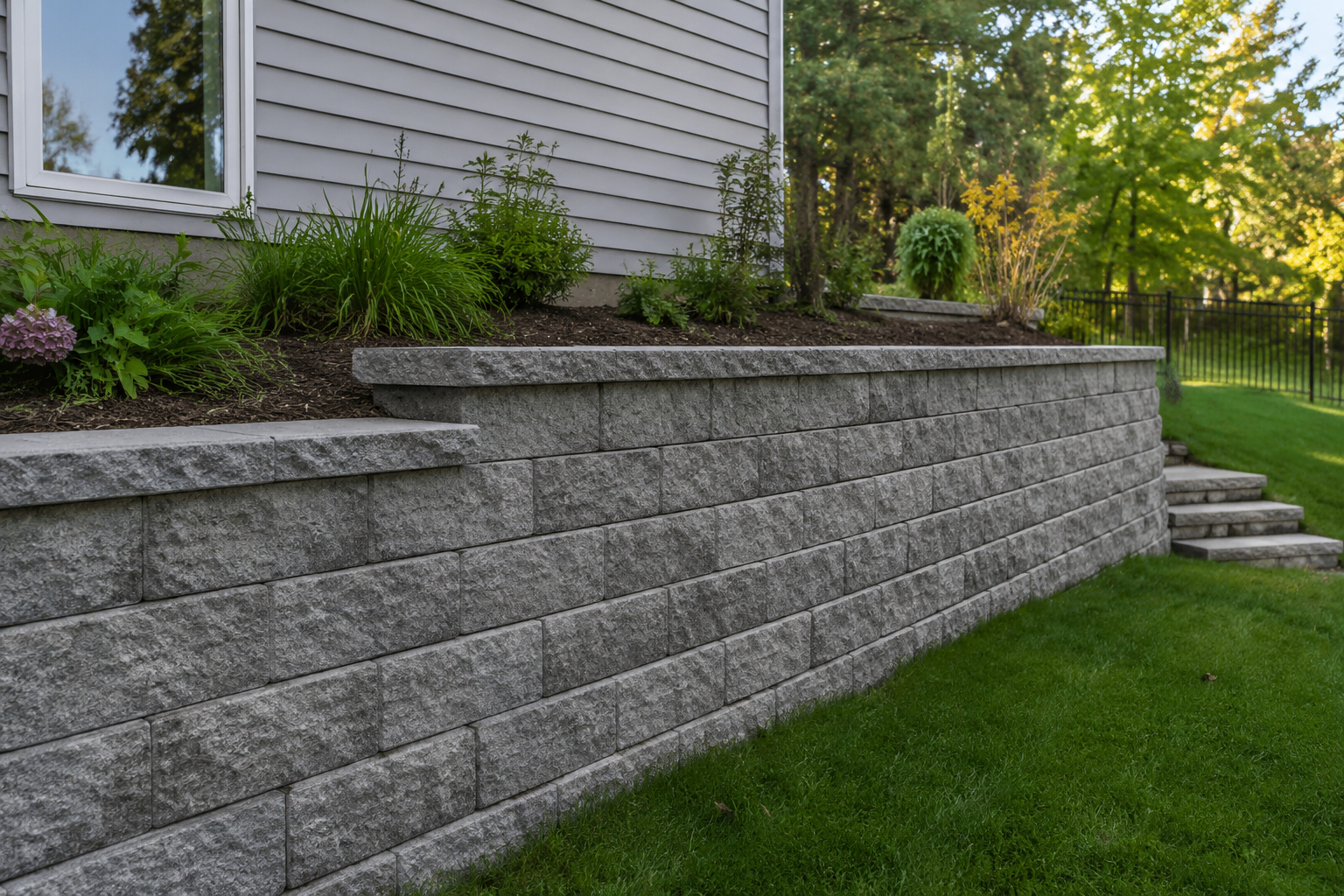
If your property has significant slope, drainage challenges, or grade changes, a patio may need to be designed alongside retaining walls or other grade-control features. Our retaining wall cost guide for Roanoke, VA explains some of the factors that go into those projects.
5. Using the Wrong Bedding Layer — Or Using It to Fix the Base
The bedding layer is the thin material directly beneath the pavers.
Its job is not to repair a poorly graded base.
That's worth repeating.
Bedding material should not become a Band-Aid for bad base preparation.
If one side needs a tiny amount of bedding and another area needs several inches just to make the surface level, something underneath probably needs to be corrected.
Bedding Materials Depend on the System
Traditional sand-set interlocking concrete pavers commonly use a properly graded concrete bedding sand.
Open-graded systems may instead use a small angular aggregate as the bedding course.
Some clay paver applications may have specific manufacturer recommendations.
The correct material depends on the pavement system and product being installed.
What matters is consistency.
The bedding course should provide a uniform setting layer so the pavers can be installed and compacted evenly.
Using bedding material to compensate for major imperfections in the base can create inconsistent support and future settlement.
6. Poor or Missing Edge Restraint
Here's one homeowners rarely think about.
Pavers need something holding the perimeter together.
Without proper edge restraint, the outside rows can begin moving outward.
Once the edge moves, joints start opening.
Once joints open, the pavement begins losing interlock.
Then one little problem invites all its friends over.
What Edge Restraint Actually Does
A properly installed edge restraint provides lateral support to the pavers.
Depending on the installation, edge restraint may include:
- Concrete
- Properly designed plastic restraint
- Aluminum systems
- Steel systems
- Curbs
- Existing rigid structures
The correct solution depends heavily on the base system and surrounding conditions.
For example, some standard spike-in plastic restraints work well when properly secured into a dense-graded aggregate base.
Open-graded installations can require different detailing because there may not be a dense material capable of securely holding traditional spikes.
Dirt Is Not Edge Restraint
Packing soil against the outside pavers and hoping Mother Nature handles the rest isn't really an installation detail.
It's optimism.
And optimism is a terrible construction material.
7. Skipping Proper Joint Filling and Final Compaction
Once the pavers are installed, we're still not finished.
The joints between interlocking pavers are part of the pavement system.
Depending on the application and paver manufacturer, joints may be filled with:
- Traditional joint sand
- Polymeric sand
- Resin-based jointing products
- Other approved materials
Why Joint Material Matters
Joint material helps support interlock between neighboring pavers.
If joints become empty or improperly filled, you may eventually see:
- Paver movement
- Wider joints
- Sand loss
- Weed growth
- Ant activity
- Edge movement
Final Compaction Is Part of the Installation
Interlocking concrete pavers are typically compacted after placement using equipment appropriate for the paver.
That process helps seat the pavers into the bedding layer and works joint material deeper into the pavement.
Depending on the paver surface and manufacturer's instructions, a protective pad may be required beneath the compactor to prevent scratches or surface damage.
This is another reason simply laying every paver perfectly by hand doesn't mean the installation is complete.
The patio still needs to become a system.
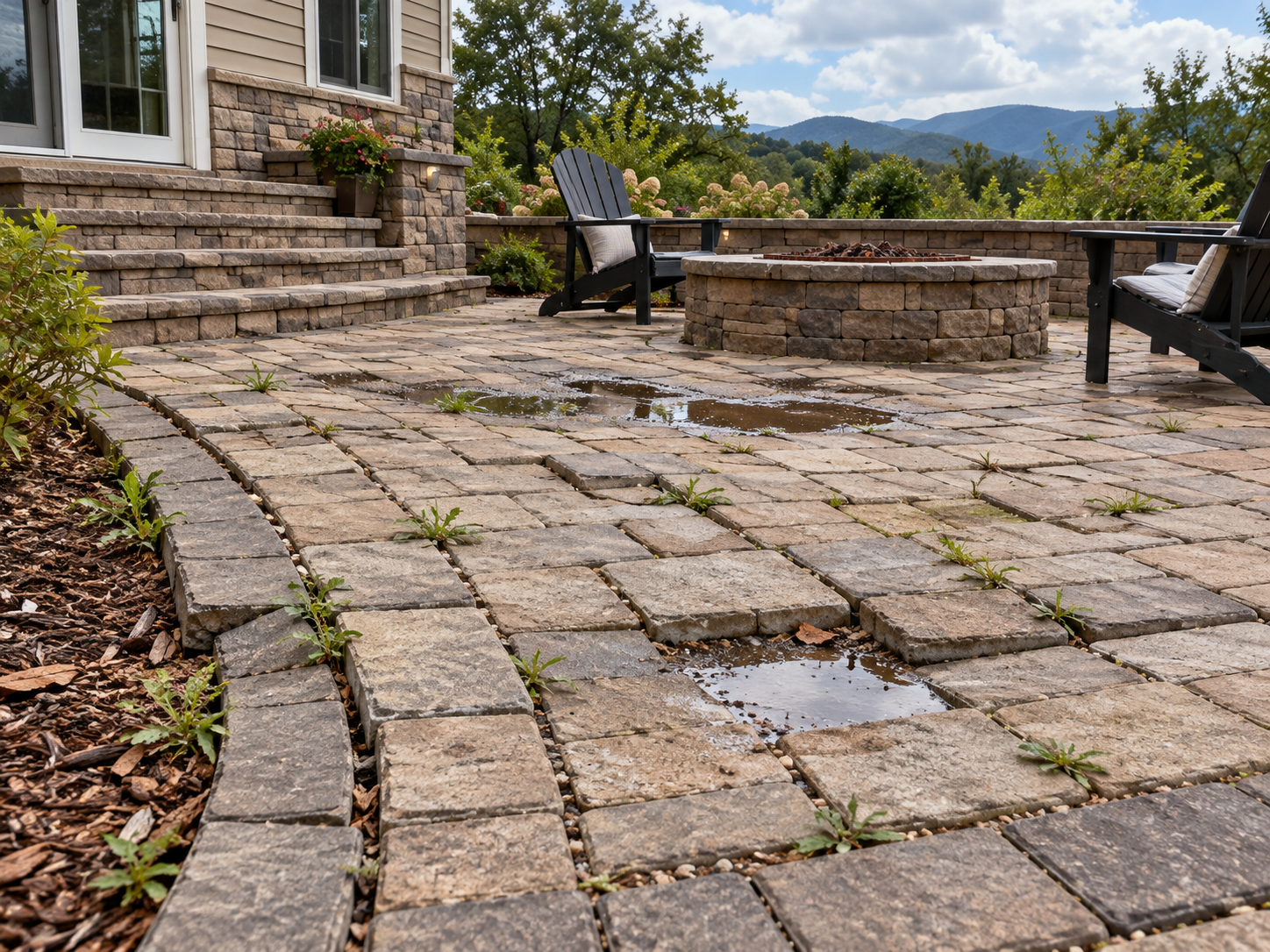
What Does a Failing Paver Patio Look Like?
Patio failure doesn't necessarily mean the entire thing suddenly collapses into the earth like a sinkhole.
Usually it starts much more subtly.
Common warning signs include:
Sinking or Low Areas
Individual sections begin settling below surrounding pavers.
This may indicate problems with the subgrade, base or compaction.
Pavers That Rock When You Walk on Them
Rocking units often mean support beneath the paver is inconsistent.
Water Puddling After Rain
Some temporary surface water during a heavy storm isn't necessarily catastrophic, but persistent low areas that repeatedly hold water deserve attention.
Joints Getting Wider
This can indicate movement within the pavement or failing edge restraint.
Pavers Separating Around the Perimeter
Look closely at the outside edges.
Movement there often points toward insufficient lateral restraint.
Uneven Areas That Continue Getting Worse
Small settlement isn't always a disaster.
But continuing movement deserves investigation because repairing the cause early is usually easier than waiting until a larger portion of the patio is affected.
Are Paver Patios a Bad Choice for Virginia?
Absolutely not.
In fact, properly installed pavers are an excellent choice for Southwest Virginia.
The key words are:
Properly installed.
Unlike one continuous rigid slab, an interlocking paver system is made from individual units.
That makes localized repairs possible.
If underground utility work is required years later, sections can often be removed and reinstalled instead of leaving a permanent patched area.
And when constructed correctly, pavers can handle the seasonal weather changes we experience throughout Virginia extremely well.
If you're still deciding between materials, read our complete comparison of paver patios vs. concrete patios in Roanoke, VA.
The problem isn't pavers.
The problem is expecting the top few inches of a patio to compensate for shortcuts taken in everything underneath it.
They can't.
Cheap Paver Patio Quotes: What Should Homeowners Ask?
We're not going to pretend the highest quote automatically means the best contractor.
It doesn't.
But when one patio quote is dramatically cheaper than everything else, homeowners should understand why.
Ask questions.
Ask Your Hardscape Contractor:
- How deep will you excavate?
- What base material are you using?
- How thick will the compacted base be?
- How will the base be compacted?
- What bedding material will be used?
- How are you handling drainage?
- What pitch will the patio have?
- What type of edge restraint will be installed?
- What joint material will be used?
- Will the pavers receive final compaction?
- How are existing doors, concrete, asphalt or walkways being handled?
- What happens if unsuitable soil is discovered?
A professional hardscape contractor should be able to explain the system they're building.
You don't have to understand every aggregate size or technical specification.
But you should feel like there's an actual plan underneath the patio.
Why Proper Paver Installation Costs More Upfront
Here's the part nobody loves hearing.
The work you'll never see costs money too.
Proper excavation costs money.
Hauling spoils costs money.
Aggregate costs money.
Compaction equipment costs money.
Drainage costs money.
Edge restraint costs money.
Experienced labor costs money.
And none of those things are nearly as fun to show your neighbors as the new pavers.
But they're the reason you're still showing your neighbors the patio ten years later instead of showing them where it sank.
When comparing patio estimates, don't just compare:
How many square feet of pavers am I getting?
Compare what's actually being built underneath those square feet.
Because that's where a large portion of the value lives.
For a better idea of what goes into actual patio pricing, see our paver patio pricing guide for Roanoke and Southwest Virginia.
Can a Failing Paver Patio Be Repaired?
Often, yes.
One of the advantages of segmental paver systems is repairability.
Depending on the problem, a contractor may be able to:
- Remove the affected pavers
- Remove bedding material
- Repair or rebuild the failed base
- Re-establish proper grade
- Replace bedding material
- Reinstall the existing pavers
- Compact the area
- Refill the joints
That doesn't mean every failed patio is an easy repair.
If the problem affects the entire base, drainage system or subgrade, larger sections may need to be rebuilt.
That's why doing it correctly the first time is considerably cheaper than paying somebody to discover what happened underneath it later.
Frequently Asked Questions About Paver Patio Failure
Why do paver patios sink?
Paver patios commonly sink when the soil, aggregate base or bedding system beneath the pavers settles. Poor excavation, inadequate compaction, drainage problems and unsuitable subgrade conditions can all contribute to settlement.
How long should a properly installed paver patio last?
A properly designed and installed paver patio can provide decades of service. Longevity depends on soil conditions, base construction, drainage, materials, installation quality, use and maintenance.
Do paver patios need a gravel base?
Most flexible paver patio systems require a properly designed aggregate base beneath the bedding course. The specific aggregate and required depth depend on the installation system, site conditions and manufacturer recommendations.
Is crusher run good for a paver patio?
Dense-graded aggregate such as crusher run can be an appropriate paver base when properly specified, placed and compacted. Open-graded aggregate systems are another option. Neither system should automatically be considered correct for every project.
Is #57 stone good under pavers?
ASTM #57 stone can be part of an open-graded paver base system when the entire pavement assembly is designed for that installation method. It should not simply be substituted into a traditional system without considering bedding material, drainage and edge restraint.
Why are the edges of my paver patio spreading apart?
Movement around the perimeter can indicate inadequate or failing edge restraint. Edge restraints help prevent lateral movement and maintain interlock throughout the pavement.
Should pavers be compacted after installation?
Interlocking concrete paver installations generally require final compaction to seat the pavers into the bedding layer and help fill the joints. The paver manufacturer's instructions should always be followed, particularly with textured or specialty surfaces.
Should water sit on a paver patio?
A patio should normally be graded so surface water moves toward an appropriate drainage area rather than remaining in persistent low spots. Drainage requirements can vary depending on the site and pavement system.
Can an existing paver patio be repaired without replacing everything?
Often, yes. One benefit of segmental pavers is that affected areas can frequently be removed, the underlying problem corrected and the original pavers reinstalled.
Planning a Paver Patio in Roanoke, VA?
A paver patio shouldn't just look good the afternoon the contractor finishes it.
It should still look good years later.
That's why we spend so much time thinking about things homeowners will eventually never see:
The excavation.
The elevations.
The subgrade.
The base.
The compaction.
The drainage.
The bedding.
The edges.
Because once all of that disappears underneath a beautiful finished patio, it's already too late to fake it.
At Skyline Hardscapes & Premier Outdoor Living, we design and build paver patios, walkways, retaining walls, outdoor kitchens, fire features and complete outdoor living spaces throughout Roanoke, Salem, Botetourt, Bedford, Smith Mountain Lake, Lexington, Lynchburg, Blacksburg, Christiansburg, Forest and surrounding Southwest Virginia communities.
You can also see one of our completed local projects in this custom Nicolock paver patio and LP gas fire pit installation in Roanoke, VA.
Whether you're planning a simple patio or an entire backyard transformation, we'll help design the project around your home, property, elevations and the way you actually want to use the space.
Related Outdoor Living Resources
- How Much Does a Paver Patio Cost in Roanoke, VA? 2026 Pricing Guide
- Paver Patios vs. Concrete Patios: Which Is Better in Roanoke, VA?
- 7 Biggest Mistakes People Make When Building a Patio
- How Much Does a Retaining Wall Cost in Roanoke, VA? 2026 Pricing Guide
- Custom Nicolock Paver Patio & LP Gas Fire Pit Installation in Roanoke, VA
- Paver Patios
- Hardscape Contractor Services
Ready to start planning your outdoor living project?
Schedule a free in-home design consultation with Skyline Hardscapes & Premier Outdoor Living.
Because anybody can make a patio look good on installation day.
We're interested in how it looks years from now.
Do it once. Do it right.
Skyline Hardscapes & Premier Outdoor Living — Done Right.